Barcelona vs Athletic Bilbao
Barcelona’s search for control against an Athletic Club side looking for a result away at the Camp Nou.
2:0
Detailed match breakdowns, tactical theory, training methods, and historical reviews for coaches, analysts, and football enthusiasts.
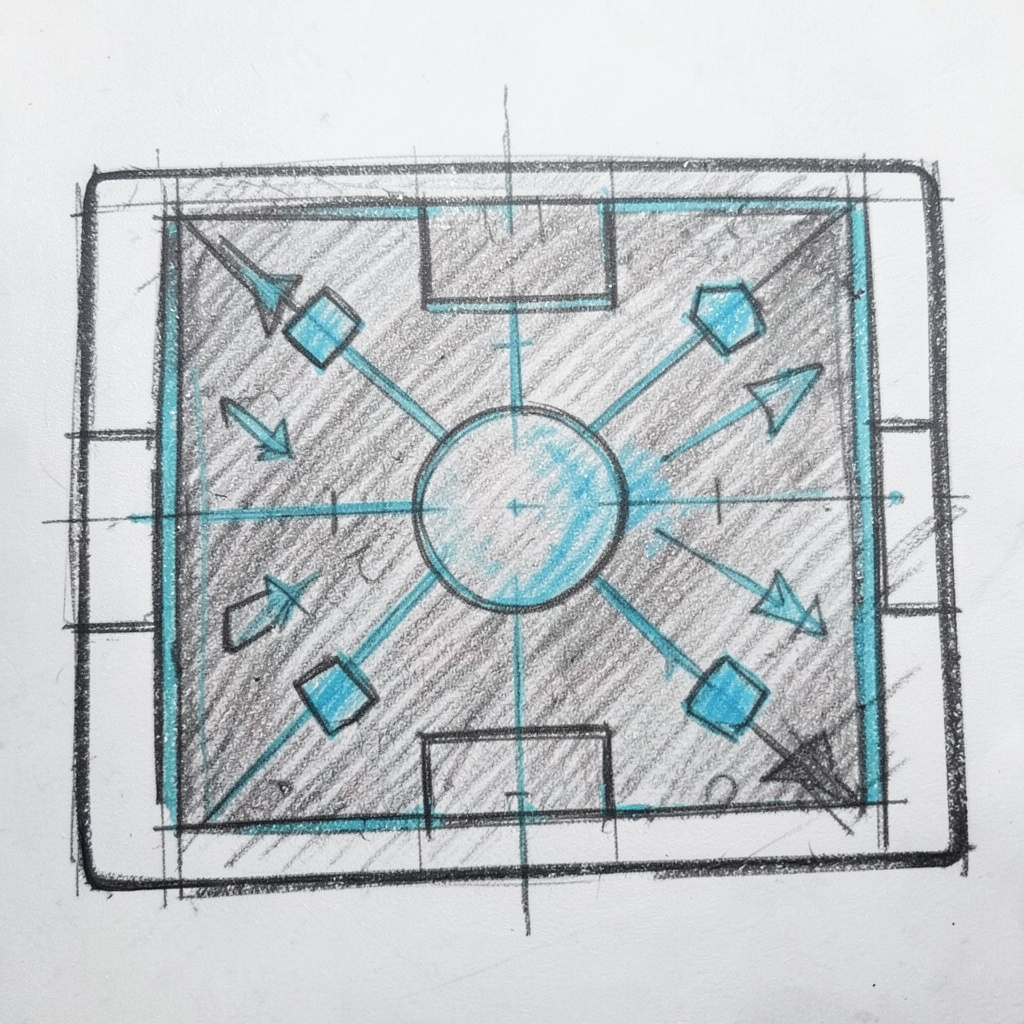
Adin Osmanbasic is a resource for football coaching, analysis, and strategy. The material examines how teams shape possession, press, create overloads, and make decisions in high-level matches.
Tactical breakdowns from La Liga, the Premier League, and the Champions League.
Positional play, Juego de Posición, and influential coaching philosophies.
Retrospective reviews of important finals and the tactical ideas behind them.
Technical and tactical drills, including positional-play concepts in practice.
Each review examines team shape, pressing relationships, possession patterns, and the decisions that shaped the result.
Barcelona’s search for control against an Athletic Club side looking for a result away at the Camp Nou.
A tactical examination of Barcelona against a team that had troubled other leading Spanish clubs.
El Clasico revisited through the technical strengths and tactical choices of both sides.
How Arsenal’s pressing movements were shaped to disrupt Liverpool’s system in the first half.
A tactical battle in which Bayern’s fluid system countered Leverkusen’s pressing and transition focus.
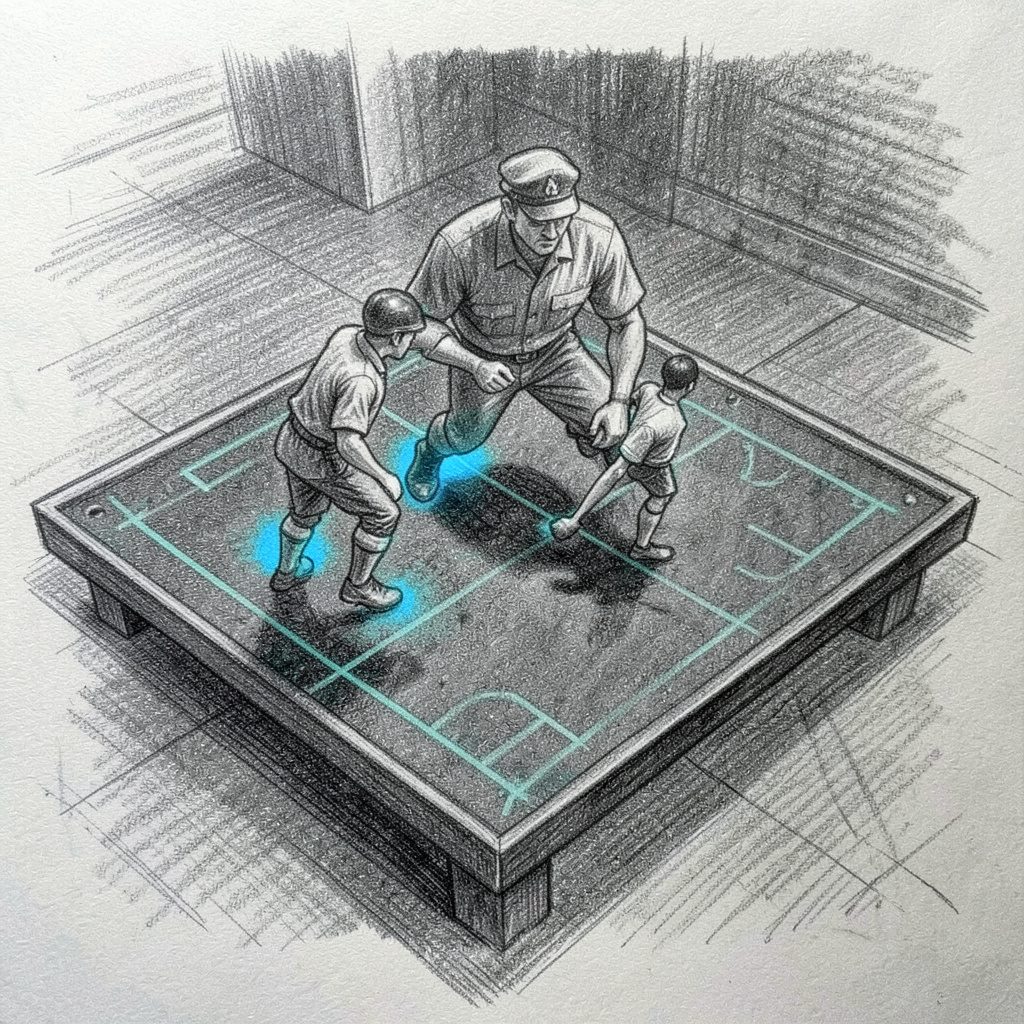
The theory section examines Juego de Posición under Pep Guardiola, including the principles behind the philosophy, game analysis, and links to relevant interviews and visual material.
It also considers the Italian “Giochi di Posizione” and Dutch “Positiespel” traditions, connecting theory with the training and match-analysis sections.
Explore tactical theoryAdin Osmanbasic's site is built around a single conviction: football is a game of decisions, and every decision can be studied. The homepage introduces a coach whose work spans the technical area, the training ground, and the analysis desk, framing the craft of coaching as a blend of practical instruction and rigorous research into how the game actually unfolds. The dark, poster-like design mirrors that seriousness, using oversized condensed type and teal accents to treat tactical thinking as something worth displaying rather than hiding inside a quiet blog post.
The career path described on the site runs through academy environments, youth development, and professional staff rooms, illustrating how coaching at the highest level is rarely a straight line. Current work as a first-team assistant coach in Major League Soccer is paired with the pursuit of advanced licensing, a combination that reflects a profession that demands both relational skill and technical study. The emphasis stays on the learning process itself, on how understanding accumulates across seasons, matches, and individual player development.
A recurring theme is the analysis of play: tactical breakdowns, video study, and match preparation that turn observation into transferable principles. Match reports on the site examine how teams build possession, shift shape, and respond to opponents, treating the Spielverlagerung and other structural ideas as tools for explaining why a pattern succeeded or failed. The writing style is instructional without being academic, aimed at coaches and players who want a clearer vocabulary for what they already half-see on the pitch.
The site's coaching philosophy centers on individual improvement within a team framework. Session work, player feedback, and staff responsibilities are presented as parts of one loop: study the game, plan the session, deliver it, review the outcome, adjust. This cyclical view of coaching is what links the professional staff work with the academy background and the analytical writing, since each stage feeds the next and no single piece stands alone as the method.
Alongside tactical writing, the site covers the theory and history of the game, contributing to an online conversation rather than hoarding ideas. Articles and video breakdowns appear alongside discussions of modern trends, offering readers multiple ways into the same subject, whether they prefer reading a sequence of frames described in prose or watching the movement explained directly. Sharing analysis publicly is treated as part of the craft, a way of sharpening understanding through argument and exchange with other writers and coaches.
Match analysis pieces focus on concrete questions rather than general impressions: how a side's shape shifted once possession changed, why a press broke down, what a coach could have done differently. Writing about fixtures involving well-known clubs demonstrates the method in action, turning a result into a study of phases of play and decision-making under pressure. The tone remains descriptive and calm, avoiding prediction or certainty, and invites the reader to form their own interpretation of the same footage.
Behind the portfolio of articles, video sessions, and staff roles sits a clear professional identity: a coach who treats football as both a craft to be practised and a subject to be researched. Mentorship, player development, and day-to-day training responsibilities all draw on the same analytical habit of watching closely and questioning why. That continuity between the touchline, the classroom, and the editing desk is the thread running through the site, and it explains why the material spans so many formats.
The overall presentation reinforces the content: flat colour blocks, generous spacing, and high-contrast typography that lets ideas dominate the page. Dark charcoal backgrounds with teal highlights give the site a serious, workshop-like atmosphere, closer to a coaching office than a personal portfolio. Navigation remains simple, so articles, videos, and written analysis are easy to reach, and the site functions as a reference library for anyone invested in the tactical side of football and the work of improving players and teams.
Historical reviews examine the tactical approaches of legendary teams and the early coaching careers of influential managers.
A final between historic clubs in Vienna, with Louis van Gaal and Fabio Capello both young coaches at the time.
Inter’s 2–0 victory reviewed against the background of their European semi-final against Barcelona.
Adin Osmanbasic connects with the wider football community through social media, sharing discussion around tactics, matches, and the wider game.
Explore coach profiles, player and team analysis, book analysis, portraits, and video content alongside the core written work.